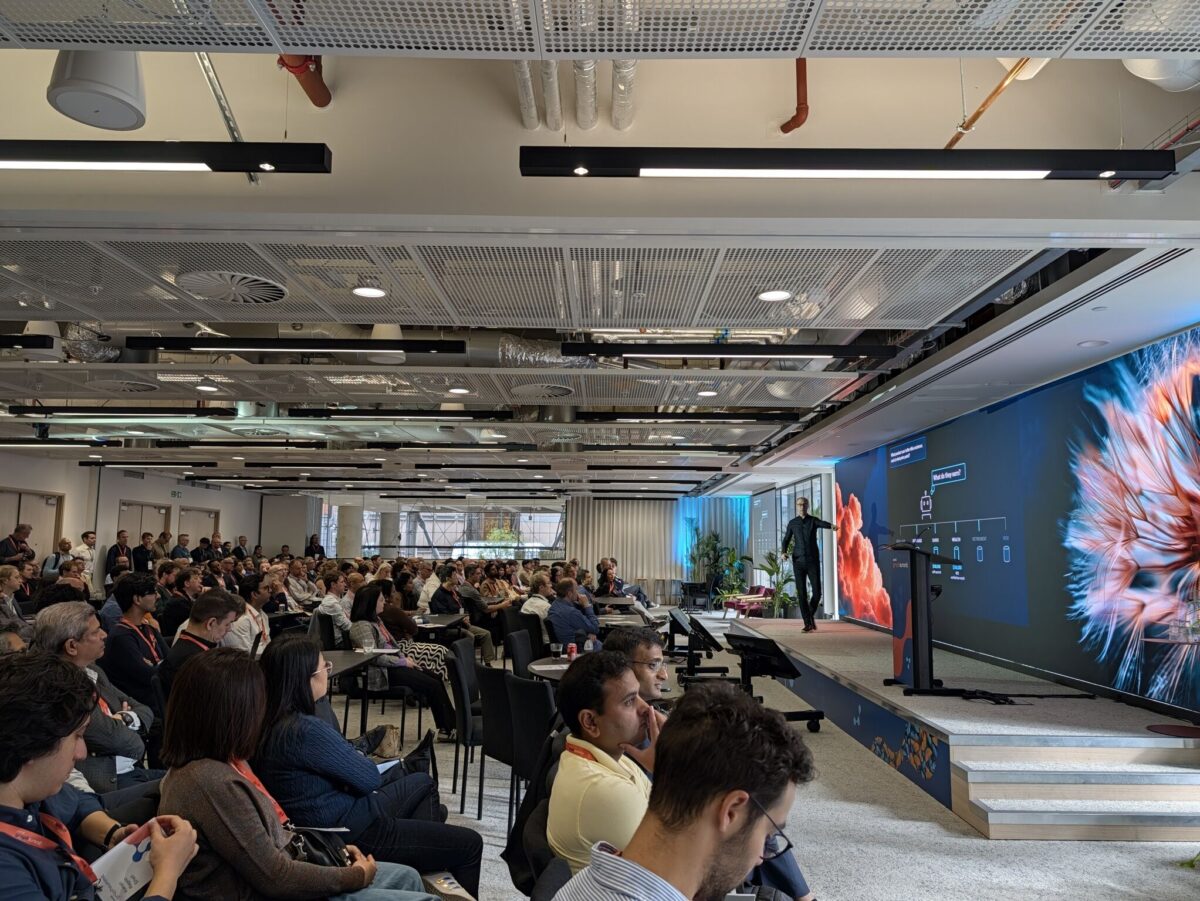
Earlier this week at work we got talking about not boxing ourselves into our roles. Working with AI is not a narrow job. You end up touching all sorts of different fields, and a team that runs on “we have always done it this way” gets left behind. You have to keep learning. I said the thing I have been saying since I was sixteen: I know that I don’t know.
I learnt it in the third year of liceo, a decade ago now, in the philosophy class, taught in Italian. We started with the pre-Socratics, the ones who tried to boil the whole world down to one substance: Thales saying it was all water, others saying air, or fire. Then we got to Socrates, and the first thing they taught us was that he was counted the wisest man in Athens only because he alone knew that he knew nothing. “So di non sapere.” My classmates and I latched onto it at once and started saying it as a joke, in the middle of any lecture, in other subjects entirely, the perfect cover for not having done the reading. Socrates was the last philosopher who was easy to understand. After him came Plato, then Aristotle, and things started getting complicated. They have kept getting more complicated for the two and a half millennia since, right up to now.
I never stopped using it, and somewhere the joke quietly turned into something I believe, without losing the joke. It is three things at once, and I mean all of them. It is genuine: I am comfortable saying I do not know, and wary of people who are never unsure. It is an engine: if you start from not knowing, you have somewhere to go, you keep learning. And it is still an excuse, the cleanest one there is, because it happens to be true. When I do not know something I probably should, I reach for a line that is two and a half thousand years old and let myself off the hook. And it works, because Socrates was right.
The engine is the one I lean on most. The day you decide you know everything is the day you start turning into a relic, stuck in your ways. A teacher of mine once gave me a line I have kept for years: without problems there is no meaning. Without anything to challenge you, you stop improving.
That is why it came out in the meeting. The point on the table was that none of us can sit still while the ground moves, and the most useful posture I have for that is the one I picked up at sixteen as a way of dodging questions. It helps that the people I work with will say it too: a room full of people comfortable admitting they do not know everything is a relief next to one person stuck on the idea that they do. Admitting that something is not clear, or that you do not know it at all, is not a bad thing. It is not the opposite of getting good at something, it is where it starts.
There is an irony closer to home. The people who know me, friends and family, half believe I know everything. I don’t. I know bits and pieces of a lot of different things and I put them together, jack of all trades, master of none. The rest I look up. A few years ago that meant a quick bit of research. Now it means a simple question to an AI, and I come away understanding the thing far better than I used to.
Which is what makes the work I do all day strange. I think AI can help almost anyone understand almost anything, better and faster than before. It can also do real damage, because it will convince you, fluently and confidently, of things that are not true. The machines are brilliant at the exact opposite of the line I carry. They never say they do not know. Ask one something it has no idea about and it will tell you anyway, the whole answer, none of it true. They have read more than any human ever will and missed the one thing Socrates got right. I spend my days with a thing that cannot say “I don’t know,” carrying around a line whose entire point is that you should.
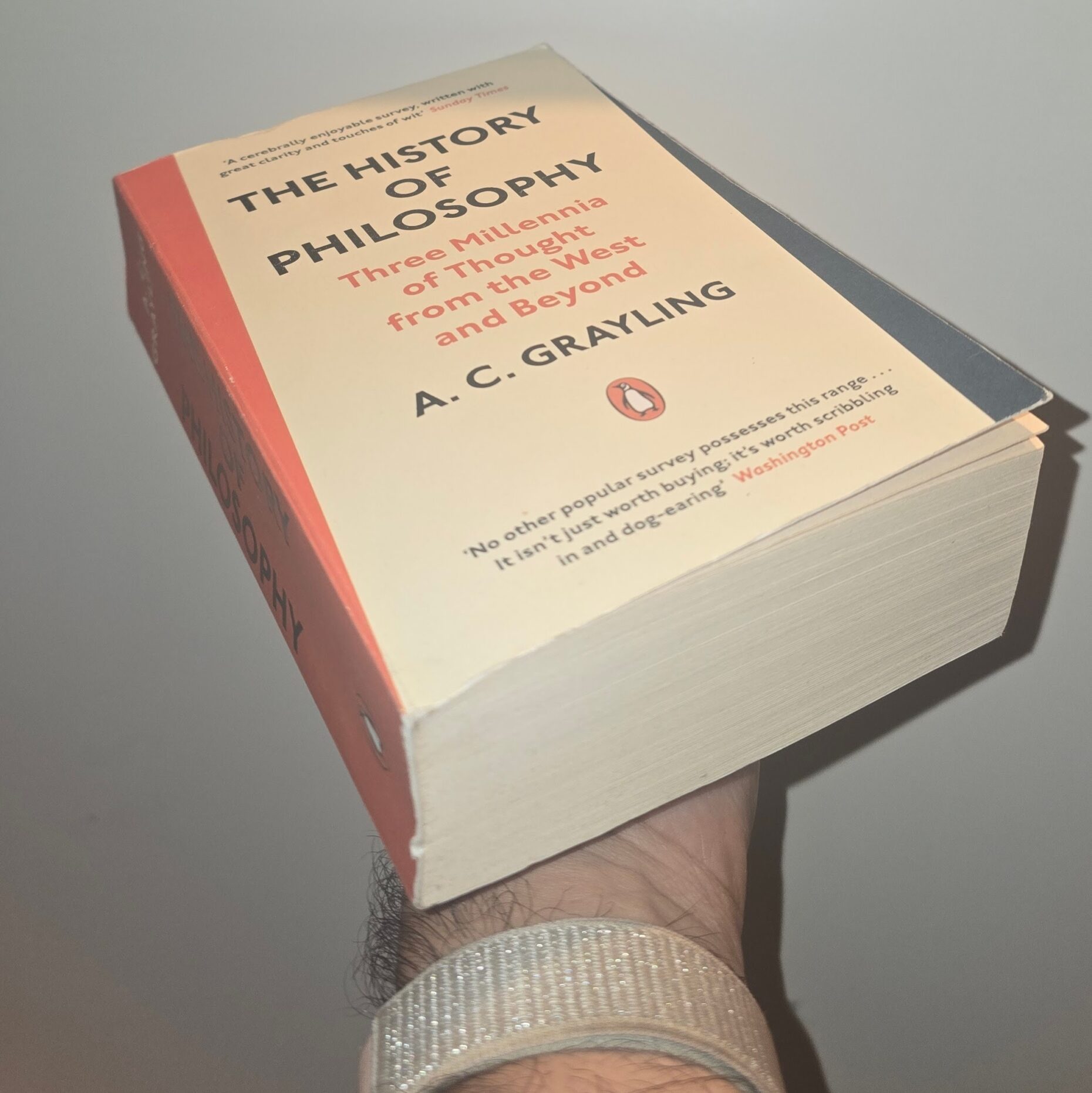
On my shelf there is a seven-hundred-page history of philosophy I bought a while ago and have not opened. It is a brick. Every time I notice it I feel the old line again, all three meanings at once: I genuinely have no idea what is in there, I would like to, and for now, not having read it is fine. Although that is not quite true. I have a general idea: I would know the names near the start, the ones from old homework and exams, Thales and his water, Socrates. Everything that came after them, I could not tell you much about. What I hope to find in there, somewhere, are names that are not European. Most of what gets taught and written stops at the edge of Europe, as if the rest of the world were not also thinking.
Or I skip the reading altogether and listen to it on a few cycle rides instead. As an audiobook it is twenty-eight hours. Three thousand years of human knowledge, compressed into a mere twenty-eight hours. I know that I don’t know. I will get to it. Probably.