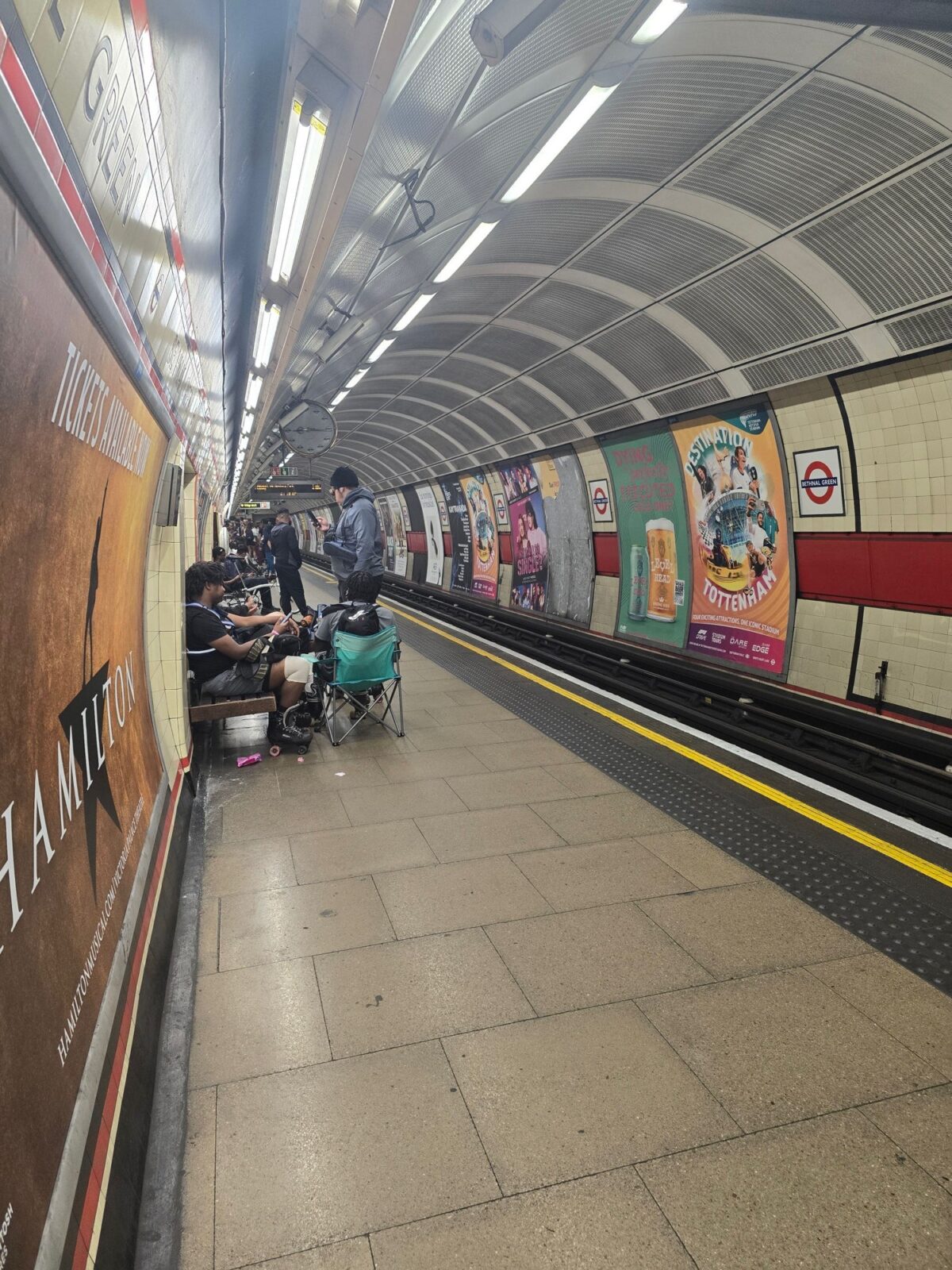
Rimandato a settembre. Italian for “sent back to September.” It’s what your teachers write next to your name when you fail a subject badly enough that they won’t let you off, but not badly enough to make you repeat the year. You get the summer to study. Then in September you sit a re-exam. Pass it, you move up. Fail it, you repeat.
I got rimandato in German every year I could. Four years in a row. A fifth wasn’t possible, because the final year of liceo doesn’t have a September re-exam. You either pass and graduate or you don’t.
Some of my teachers had a stock verdict for me: smart, but doesn’t apply himself. They weren’t calling me stupid. They were saying I was wasting whatever I had. They said this during liceo, about a kid who’d moved countries at six and was juggling Italian in class, Urdu at home, and German as a third language he kept failing.
Not all of them said that.
One professor at liceo had a thing for the etymology of words. She taught us to take a sentence apart before agreeing with it. I didn’t like her at the time. Her lessons felt slow and pedantic, and I’d chosen the computing option over Latin specifically to avoid that kind of work. I tuned out a lot of it.
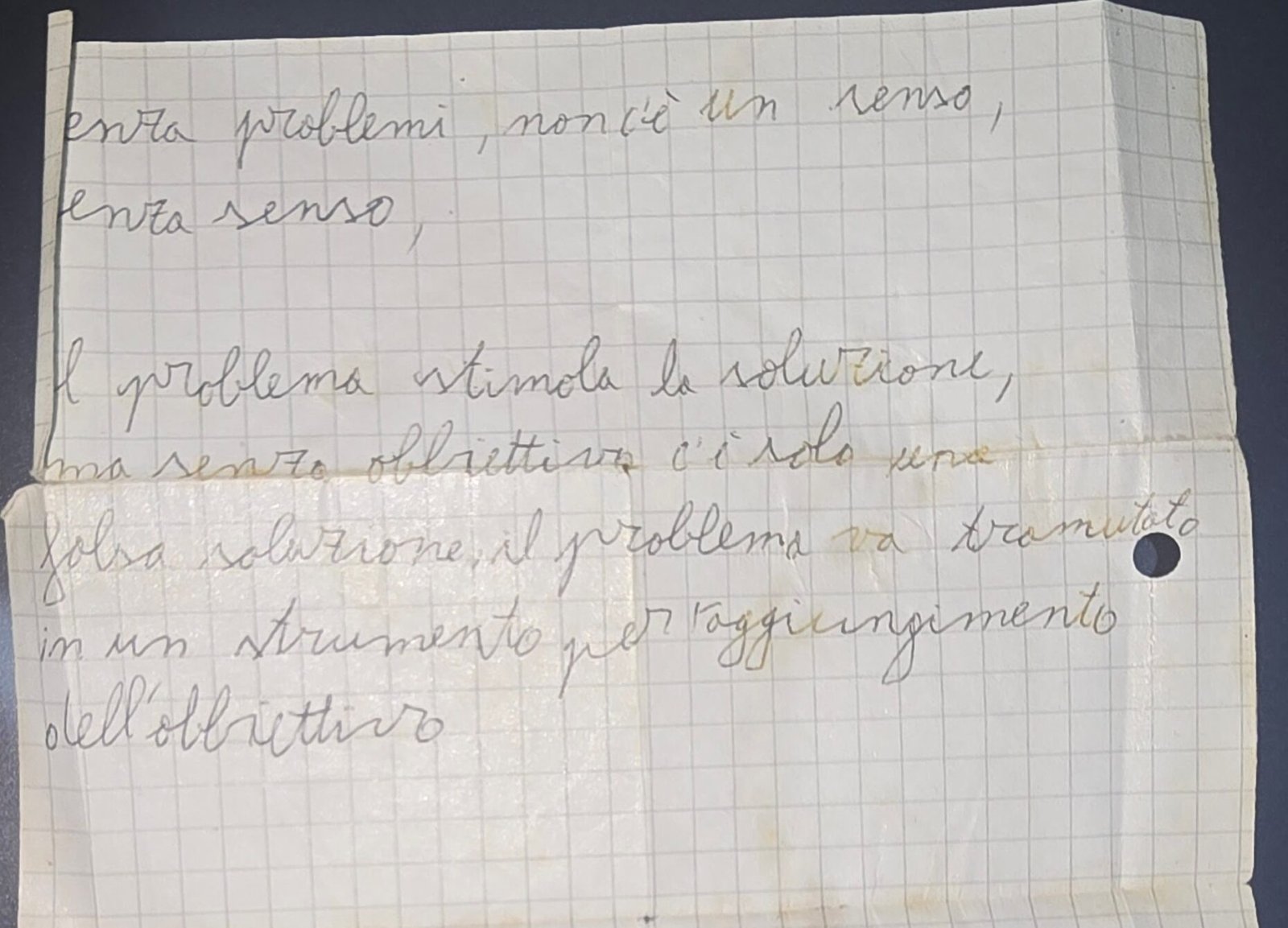
But at some point during one of her lessons, she said something I wrote down on a piece of paper. I’ve kept it for eleven years. It’s moved with me from Bolzano to London:
Senza problemi, non c’è un senso. Il problema stimola la soluzione, ma senza obbiettivo c’è solo una falsa soluzione. Il problema va tramutato in uno strumento per il raggiungimento dell’obbiettivo.
Without problems, there is no meaning. The problem stimulates the solution, but without an objective there is only a false solution. The problem must be turned into a tool for reaching the objective.
I didn’t realise how much it had stuck until I noticed I’d been carrying it around for eleven years. Her way of teaching makes more sense to me now than it did then.
I passed the maturità anyway. Then I sat the English entrance test for the University of Bolzano, which teaches some of its lectures in English. I failed. My English wasn’t good enough for partial English in a small Alpine city.
One morning I decided to apply to British universities instead. I took IELTS with no preparation. Scored 6.5. Got into London Met. Moved to London at 18.
A few years later I had a BSc in Computer Science with First Class Honours. A year after that, an MSc in AI with Distinction. A year after that, a paper published in a Springer volume.
My first proper job is at an AI consultancy in London. The founder is Italian. Most of our clients are Italian companies. He and I speak English together, even when there’s nobody else in the room. The language I wasn’t good enough for at home turned out to be the language I’d use with an Italian boss abroad.
I’m not telling this as a revenge story. The teachers who wrote me off weren’t villains. They were looking at a kid who kept failing German and giving him the verdict that fit. Maybe they were even right about the not applying part. They just couldn’t see what I’d eventually apply myself to, or that it would be somewhere else. The professor I didn’t like is the one whose handwriting I’ve kept for eleven years. The university that wouldn’t take me sits at the foot of mountains I’d still move back to tomorrow if money didn’t matter.
What stays with me is the line on the paper. The problems weren’t walls. They were signposts. I just couldn’t read them at the time.
I work as a prompt engineer now. My job is to teach machines how to apply themselves. They’re better at it than I was.